Solar power & mining
Solar Bitcoin mining: a beginner’s field guide
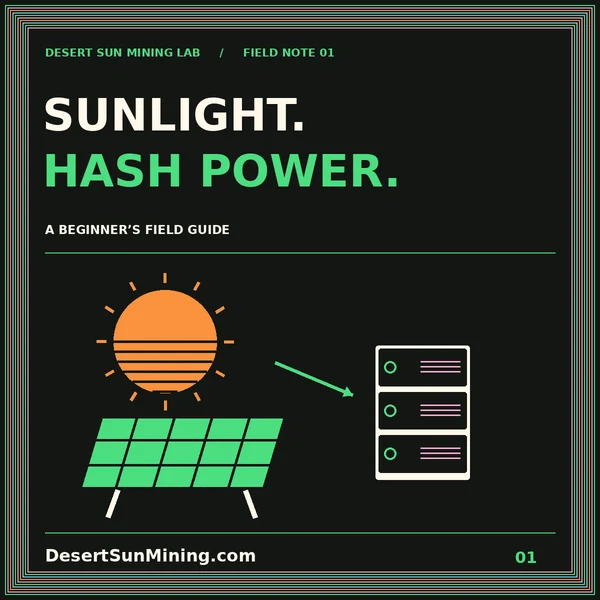
Start with your electrical load, operating window, and shutdown plan—not a promise of mining income.
7 min read
Meet the Desert Sun Mining Lab: an educational publication on solar-powered computing, direct solar cooking, and solar coffee roasting.
DesertSunMining.com is an educational guide to solar-powered computing and direct solar heat. It brings Bitcoin mining, AI GPU workloads, solar cooking, and coffee roasting into one place while keeping the technologies distinct. “Mining” here refers to cryptocurrency computing; this is not a mineral extraction company, a hosted mining service, or a seller of guaranteed returns.
The starting point is a simple question: what task are you trying to complete, and what energy arrangement would actually support it? A clear task makes equipment comparisons more useful. It also makes the limitations easier to explain before time and money are committed.
The Lab is the publication’s collection of field guides. The name describes an editorial learning space, not a claim that this website operates a research laboratory, tests every product, or has certified an installation. Articles use original explanations, clearly labeled worked examples, and a directly relevant primary source for further reading.
You will find four main reading routes: solar power and mining; AI and GPU computing; solar ovens and cooking; and solar coffee roasting. Each route connects introductory material with more specific questions about sizing, equipment, operations, and evidence. The complete Lab collection contains all ten field notes.
A solar panel supplying electricity to a computer is not the same technology as a reflector delivering heat to a cooking vessel. An AI job is not Bitcoin proof of work. A cooker sharing a site with a miner does not produce cryptocurrency by cooking food. Those distinctions are part of the content, not details to hide behind a broad brand name.
The shared-site guides explore coordination only after the individual systems are understood. A combined concept should make the energy paths, responsibilities, and operating limits easier to see—not replace them with an unexplained promise of efficiency.
The publication is for readers planning a first solar computing experiment, operators preparing a better equipment brief, off-grid cooking enthusiasts, and people evaluating solar coffee roasting. The audience is global, so the guides do not assume one local tariff, building rule, climate, product inventory, or electrical standard applies everywhere.
Use the content to organize questions and understand a proposal. Site-specific electrical, structural, food-safety, and other professional decisions require the appropriate local expertise. A worked example is not a certified design, and a research demonstration is not proof that a commercial machine will perform the same way at another site.
The editorial standards explain how sources, examples, and commercial claims are handled. When a source or an explanation needs correction, send the relevant page and the supporting context through the Contact page. Do not send passwords, wallet recovery information, or sensitive equipment credentials.
A useful field guide should help a reader ask a more precise question. That is the measure behind this publication: a clearer next step, with the assumptions still visible.
Start with your electrical load, operating window, and shutdown plan—not a promise of mining income.
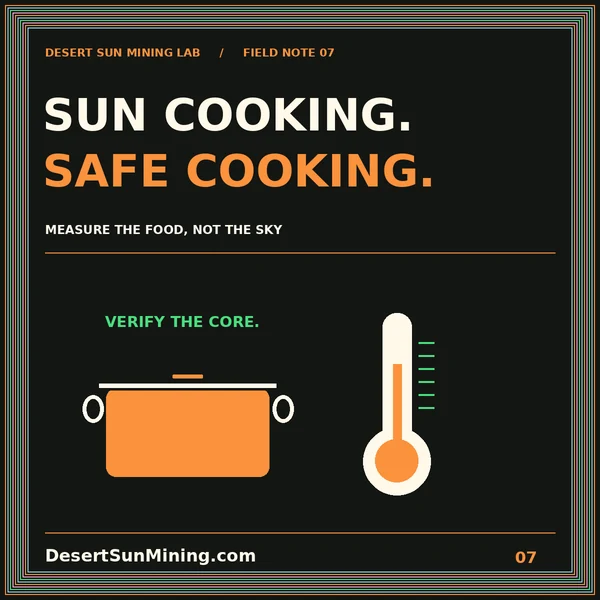
Build a complete plan for preparation, verified cooking, changing conditions, hot holding, and leftovers.
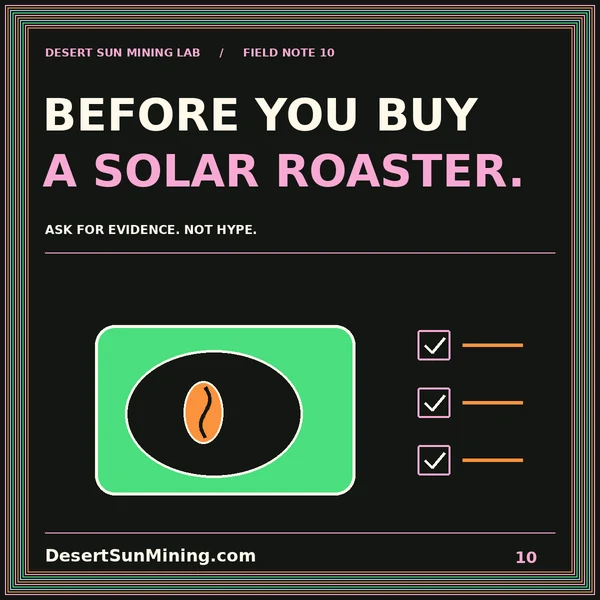
Ask for documented capability, a complete system price, relevant demonstrations, and a practical service plan.