Measure the whole load
Separate device power, supporting equipment, and the hours each component runs.
Build a solar mining plan around measured demand, the operating window, and the hours when sunlight cannot serve the load.

A solar mining system needs an answer to two questions: how much energy is required, and when is it required? A daily kilowatt-hour total alone cannot show whether a steady electrical load can operate through a changing production profile. Begin with the equipment’s actual wall-power measurement and the intended operating hours. Include ventilation, networking, and controls.
For a deliberately simple example, a steady 3-kilowatt load running for six hours uses 18 kilowatt-hours. That calculation establishes an energy amount. It does not select an inverter, a battery, or a string arrangement, and it does not guarantee six suitable hours at a particular location. The array-sizing field note shows how to develop the example without hiding its assumptions.
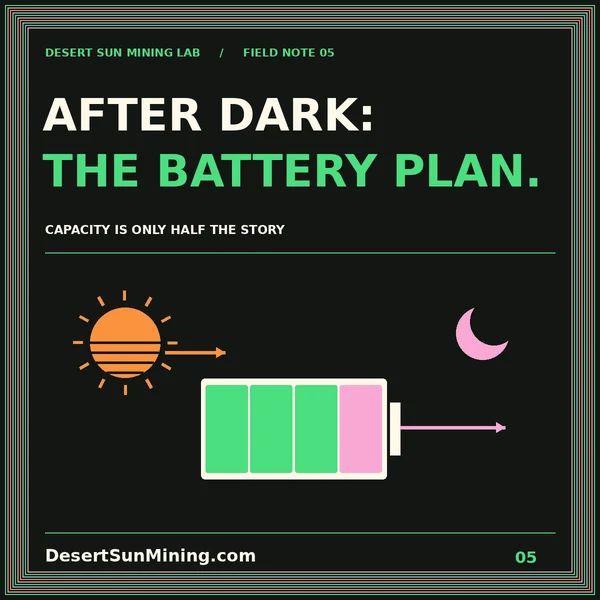
Daylight-only operation treats the computing load as flexible. The system needs a supported way to reduce or stop work when supply is insufficient. Grid-assisted operation can supplement the solar resource, but imported electricity must remain visible in the energy record. Storage-backed operation can shift some generated energy into a chosen later period, within the system’s power and usable-energy limits.
These are planning categories, not wiring instructions. Have a qualified designer review the full electrical arrangement, protection, site conditions, and relevant local requirements. A module count from a worksheet is not a completed installation plan.
Use a location-specific production model and preserve its inputs. Examine the season and hours that matter to the project rather than relying on an annual headline total. Compare expected production with the scheduled load, and mark both the shortfalls and the surplus periods. A storage model must carry its ending balance into the following period instead of starting every day with an imaginary full battery.
Keep conversion and storage losses at clearly stated boundaries. Do not apply the same loss twice or use one kilowatt-hour simultaneously to run equipment and recharge storage. The battery-sizing guide makes the capacity, power, and recharge checks explicit.
Space for cleaning, ventilation, component access, and safe isolation belongs in the design brief. A remote installation also needs understandable operating instructions and a responsible person for faults. Review desert heat and dust before finalizing the location of the computing equipment.
Keep the technology choice separate from the power plan. A solar miner must suit its intended workload. AI GPU computing has different hardware and output measures from Bitcoin mining, even if both draw electricity from the same type of array.
Use the original documentation to check context and limitations before applying a claim to a specific installation.
Separate device power, supporting equipment, and the hours each component runs.
Use a local production model and examine when demand exceeds available generation.
Document imported power, storage use, or an orderly stop rather than assuming uninterrupted operation.
Two useful distinctions for this part of the solar plan.
A transparent sizing example that separates daily energy, hourly output, and the capacity your equipment actually needs.
Work through usable energy, power limits, recharge windows, and the point at which optional mining should stop.
Plan airflow, safe cleaning, maintenance records, and hot-day shutdown rules before the first interruption.