Define the meal
Document portions, cookware dimensions, and the intended operator.
Choose a solar oven around the intended meal, cookware, operating space, and the person who will use it.
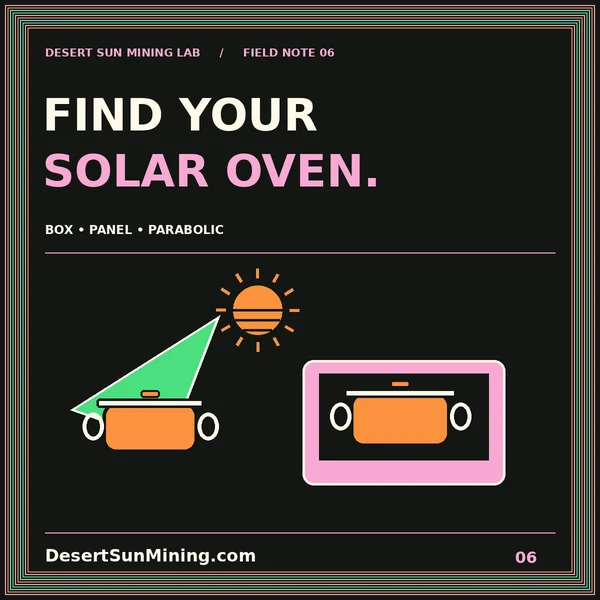
Common cooker families include reflective-panel, insulated-box, and parabolic designs. Panel cookers direct sunlight toward a vessel inside a heat-trapping enclosure. Box cookers retain heat in an insulated chamber with a transparent opening. Parabolic cookers concentrate reflected sunlight toward a cooking position. Specific models still need their own operating instructions and evaluation.
Other designs, including evacuated-tube arrangements, may have different loading and handling requirements. A family name is not a complete specification. The solar oven comparison guide turns the main differences into questions about the actual cooking task.
Measure the intended cookware, including its handles and lid. Ask whether the proposed load fits within the manufacturer’s documented use. Outside dimensions do not establish usable cooking space, and an empty-chamber temperature does not show how the equipment will handle a meal.
Think through placing and removing the hot vessel. Identify a stable surface nearby and enough room to work without leaning into hot equipment or concentrated reflected light. For shared equipment, include people unfamiliar with the cooker in the layout assessment.
Map sunlight and shade during the planned cooking period, not only at midday. Include reflector movement, operator access, and the route for carrying food. Ask the supplier about wind limits, securing methods, and safe stow positions. Do not improvise attachments that alter the intended operation.
The cooker is only part of the space. Preparation, serving, cleaning, and storage need their own arrangement. A visually compact product can still require a substantial safe working area when all parts of a cooking session are included.
Find out whether a published figure measures cooking power, heating a specified load, or simply a temperature reached without food. Those are not interchangeable results. Request the test conditions and configuration before comparing two claims.
A useful acceptance brief might specify the cookware, documented operation, manageable cleaning, and replacement parts. A supervised demonstration can also help assess handling. It does not replace an appropriate validated cooking method or food-temperature verification.
Read the solar cooking food-safety guide before operating the equipment. Have an appropriate thermometer, handling equipment, and a dependable backup method available. Do not let a desire to finish entirely on sunlight override a safe cooking process.
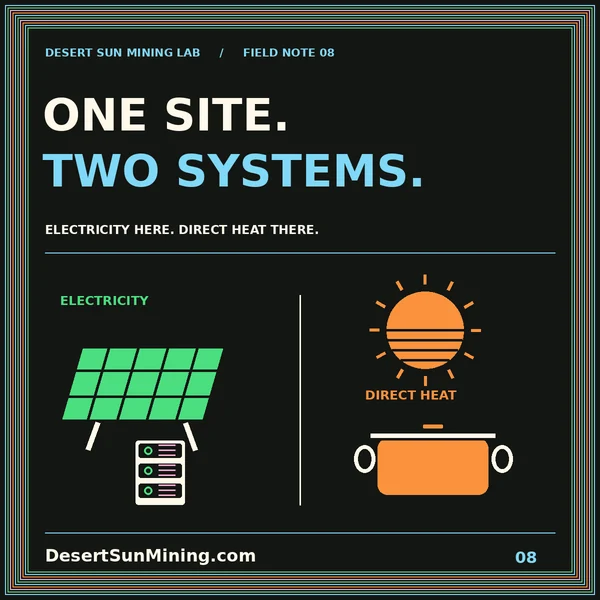
For a site that combines cooking and computing, use the shared-energy guide. Keep direct solar heat distinct from electrical consumption, and keep the clean food-handling area separate from mining equipment and maintenance activities.
Use the original documentation to check context and limitations before applying a claim to a specific installation.
Document portions, cookware dimensions, and the intended operator.
Check sunlight, access, reflector movement, stability, and safe storage.
Include temperature verification, backup heat, cleaning, and handling of finished food.
Two useful distinctions for this part of the solar plan.
Match a cooker to your meals, cookware, site, and available attention—not just its advertised peak temperature.
Build a complete plan for preparation, verified cooking, changing conditions, hot holding, and leftovers.
Explore a shared-energy concept while keeping electrical loads, direct heat, food handling, and site priorities distinct.