Confirm compatibility
Identify the exact workload, device configuration, software support, and electrical input requirements.
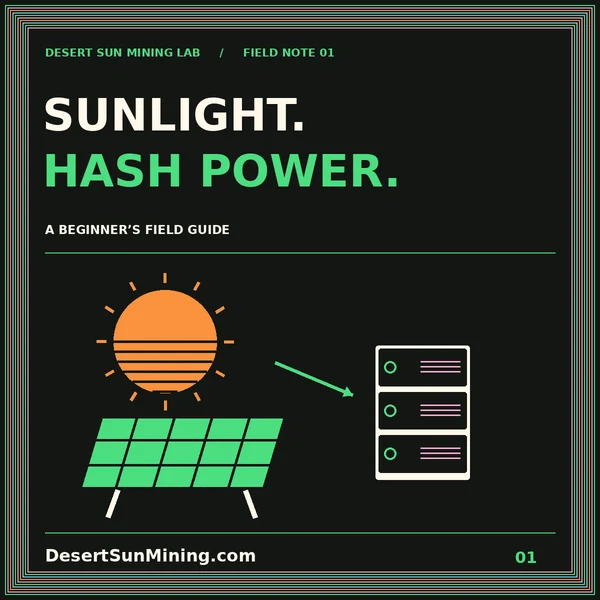
A solar miner is a computing device within a designed energy system—not a machine that can safely connect to any solar panel.

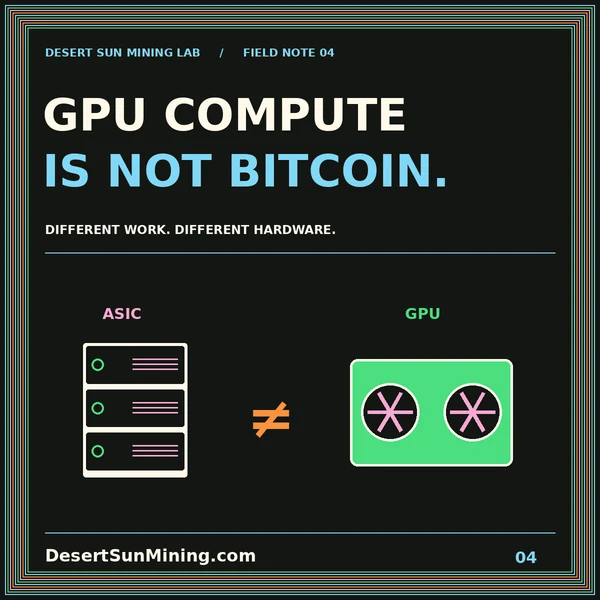
Start with the intended network or computing task. A Bitcoin mining appliance and an AI workstation are not selected by the same criteria. Write down the required hardware compatibility, software environment, and way useful output will be measured. Then obtain the exact equipment documentation for the model and configuration being considered.
The phrase “solar miner” describes the energy arrangement around the equipment. It should not be treated as a guarantee that the machine accepts variable solar input directly, tolerates every outdoor environment, or includes the necessary electrical protection. Those details need an explicit design and suitable installation.
Keep the main device, power supply, cooling, network equipment, and control loads visible in the budget. Record the operating mode when measuring consumption. A figure from one efficiency setting may not describe another, and a device-only software reading may omit supporting components.
Use the solar array-sizing article once the load schedule is documented. The equipment and electrical installation are separate checklists: compatibility on the computing side does not establish suitability on the power side.
Sketch the intake and exhaust path in the intended enclosure. Identify obstructions, recirculation risks, and where serviceable parts can be reached safely. Ask a qualified designer or the manufacturer to review any arrangement that differs from documented use. Adding a fan or a filter changes the system and should not be treated as an automatic solution.
The heat-and-dust field note develops an observation-based maintenance plan. Record measured conditions, alarms, and maintenance actions separately. Avoid turning visible dust into an unsupported diagnosis or copying a temperature limit from a different product.
A flexible solar schedule needs a normal stopping procedure and a clear restart condition. Use supported equipment controls. Do not defeat protective behavior to keep a device online or repeatedly reset an unresolved fault. Explain which actions an operator may perform and which require a qualified technician.
For a remote pilot, keep local shutdown information and service contacts available without depending entirely on an internet dashboard. Before expanding, test whether someone can understand the installation’s condition from the records and instructions that actually exist.
Include the enclosure, electrical work, metering, installation, maintenance access, and support arrangement when comparing proposals. A low device price does not describe the cost of a working site. Request a demonstration under relevant conditions and keep uncertain future receipts out of the equipment specification.
For the workload background, use the Bitcoin mining guide or the AI GPU computing guide. Choose the task first; let the measured operating requirements shape the energy system around it.
Use the original documentation to check context and limitations before applying a claim to a specific installation.
Identify the exact workload, device configuration, software support, and electrical input requirements.
Review airflow, access, noise, mounting, and manufacturer operating limits at the actual site.
Verify supported shutdown, monitoring, and restart behavior before planning unattended operation.
Two useful distinctions for this part of the solar plan.
Plan airflow, safe cleaning, maintenance records, and hot-day shutdown rules before the first interruption.
Start with your electrical load, operating window, and shutdown plan—not a promise of mining income.
Different workloads need different hardware. Define useful output, measure wall power, and test recovery before scaling.