Choose a pilot objective
Measure a defined operating behavior instead of beginning with an earnings target.
Explore how a solar power system can serve a Bitcoin mining workload while keeping energy measurements, accepted work, and actual receipts separate.
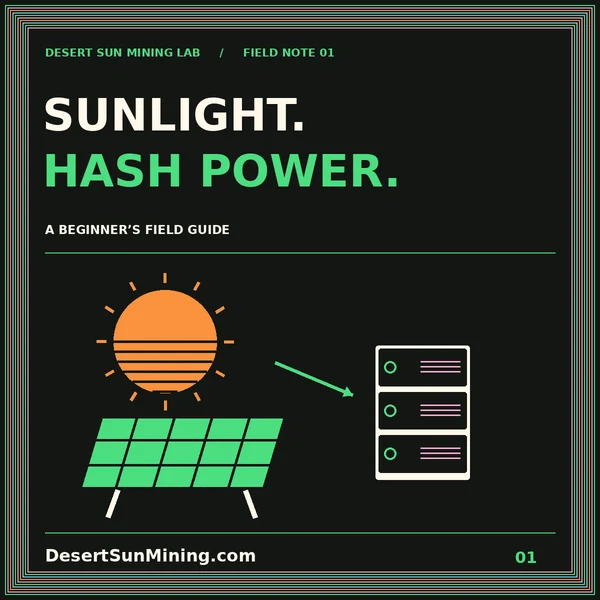
Bitcoin mining involves computational work that participates in adding blocks to the network. Supplying a mining device with solar-generated electricity changes its energy source, not the proof-of-work rules. Panels do not issue coins, and a sunny day does not guarantee a payout.
The useful starting point is a limited, measurable pilot. Decide what it should teach: perhaps reconciling energy consumption with machine activity, documenting a safe daylight operating schedule, or comparing device and pool records. The beginner’s field guide develops these choices in sequence.
Record electrical energy consumed, accepted mining work, and money actually received in separate fields. Add configuration changes and interruptions so that differences can be investigated. A machine’s local output display and a pool’s account record answer different questions; neither should silently replace the other.
Review the chosen pool’s own payout rules, thresholds, and charges before committing work. Keep account credentials and wallet recovery information private. This website does not accept deposits, operate a mining pool, offer hosted mining contracts, or promise returns.
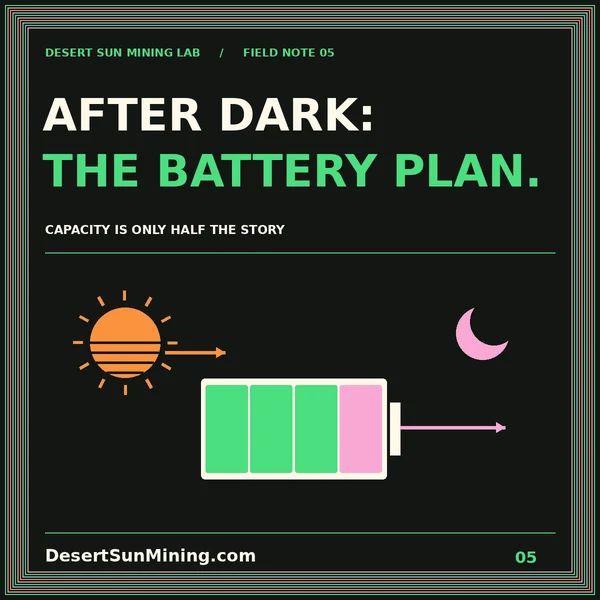
Daylight-only, grid-assisted, and storage-backed operation have different requirements. State whether work can stop, whether imported electricity is acceptable, and what duration of interruption the system is intended to bridge. Then measure the whole load and use the solar mining systems guide to build an installer brief.
A battery cannot create an energy surplus that the array does not provide. A larger inverter cannot increase the sunlight available. Check daily energy, hourly production, equipment power, and storage recharge separately. Treat illustrative calculations as a way to expose assumptions rather than a shopping list.
Separate equipment and installation purchases from operating expenses. Include supporting infrastructure, maintenance, connectivity, and imported electricity where relevant. Identify how shared solar equipment costs are allocated when the site serves other loads. Do not count the same cost twice or make energy appear costless by moving every expense elsewhere.
Keep earnings assumptions visibly uncertain. A technically functioning system does not establish a profitable project, and an assumed payback date should not substitute for a budget you can afford. Start with a capped learning exercise and review measured results before increasing capacity.
Ask qualified professionals to complete and review the electrical installation. Confirm safe access, normal start and stop behavior, and the responsible person for faults. Record both successful operation and interruptions. Use the solar miner planning guide to review the equipment environment, and return to the array-sizing article only after the load and schedule are stable enough to model.
Use the original documentation to check context and limitations before applying a claim to a specific installation.
Measure a defined operating behavior instead of beginning with an earnings target.
Compare wall energy, accepted mining work, downtime, and receipts without blending them.
Resolve electrical, thermal, and operational issues before adding devices or storage.
Two useful distinctions for this part of the solar plan.
Start with your electrical load, operating window, and shutdown plan—not a promise of mining income.
A transparent sizing example that separates daily energy, hourly output, and the capacity your equipment actually needs.
Work through usable energy, power limits, recharge windows, and the point at which optional mining should stop.