Draw separate paths
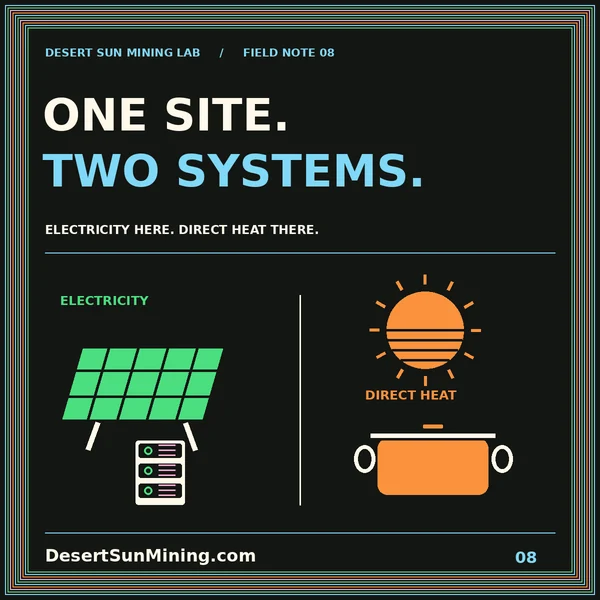
Distinguish photovoltaic electricity, direct heat, and any powered cooker components.
Explore a site that uses sunlight for both computing and cooking, while keeping the energy paths, equipment, and safety requirements separate.
“Solar food cooker mining” is a concept for planning a shared site. It does not mean a cooker generates cryptocurrency, that cooking earns mining rewards, or that the combination is a standardized appliance. The useful question is whether independently sound cooking and computing systems can share a location without unsafe interfaces or poorly understood resource conflicts.
Start with two drawings. One follows photovoltaic electricity through the designed power system to the computing equipment. The other follows direct sunlight to a dedicated solar cooker. If the cooker is electric instead, place it in the electrical load schedule and state how its demand overlaps with other devices.
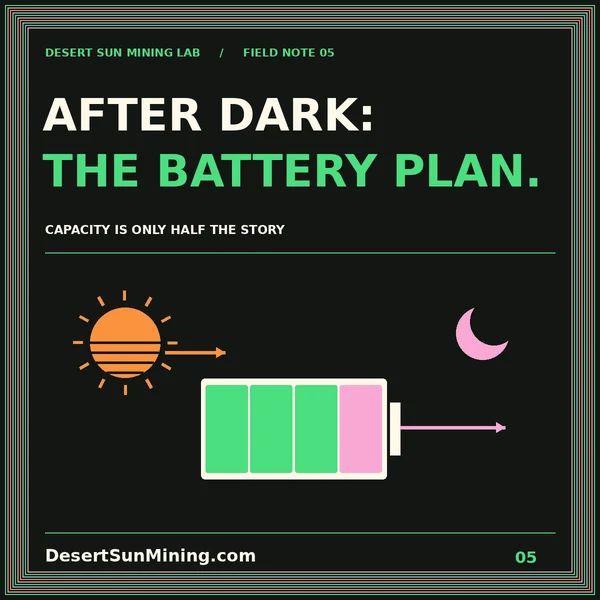
Identify essential services before optional experiments. Communications, refrigeration, or other locally important loads may need reserved capacity. Document what happens when optional mining and a cooking appliance would exceed the intended supply. A daily energy total does not eliminate a simultaneous power requirement.
Attention and physical access are resources too. A direct-heat cooker may avoid an electrical heating demand while still requiring supervision, space, and a backup plan. Make these requirements visible rather than treating the activity as having no effect on the rest of the site.
Provide a clean preparation area away from computing maintenance, discharged air, and service materials. Do not direct unfiltered mining exhaust over food or assume warm exhaust can deliver a validated cooking process. Any proposed heat recovery needs a separate engineered design and an appropriate food-safety assessment.
The shared-site field note examines these interfaces in detail. It also explains why a system that stops when sunlight is scarce cannot automatically provide dependable process heat for another activity.
Record the electrical loads separately and keep direct-heat performance in its own appropriate units. Do not subtract thermal cooking from the array’s electrical output or turn meals and computing work into an unexplained combined efficiency score.
Use a transparent method for allocating shared equipment costs. Charging the entire array to two projects and then adding them overstates cost; assigning every expense elsewhere and calling mining electricity free understates it. A clear record is more useful than an attractive but undefined savings claim.
Commission the cooking and computing systems independently, within their documented use and with qualified reviews where required. Then observe simultaneous operation for blocked walkways, load overlap, supervision conflicts, and access to shutdown instructions.
Use the solar mining guide for the electrical plan and the solar cooking guide for the meal process. The shared name does not replace either discipline. Integration is worthwhile only when it solves a specific problem while keeping both systems understandable.
Use the original documentation to check context and limitations before applying a claim to a specific installation.
Distinguish photovoltaic electricity, direct heat, and any powered cooker components.
Reserve essential services and define how optional loads stop or wait.
Check clean food handling, access, supervision, electrical overlap, and shutdown procedures.
Two useful distinctions for this part of the solar plan.
Explore a shared-energy concept while keeping electrical loads, direct heat, food handling, and site priorities distinct.
Work through usable energy, power limits, recharge windows, and the point at which optional mining should stop.
Build a complete plan for preparation, verified cooking, changing conditions, hot holding, and leftovers.