Define the task
Choose mining, a specific AI workload, a cooking process, or a coffee batch before sizing equipment.
A practical starting point for using desert sunlight to power computers, cook meals, and explore coffee roasting—without confusing the technologies.
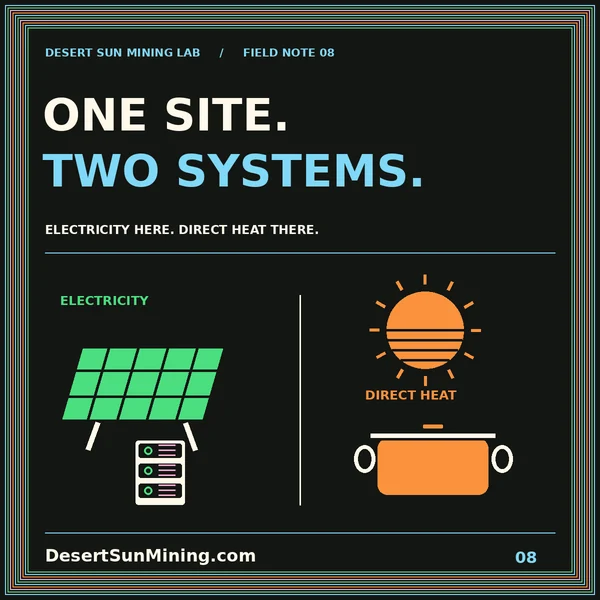
Desert Sun Mining brings together solar-powered computing and direct solar heat in one educational guide. “Mining” here refers to cryptocurrency computing, not mineral extraction. The broader site also covers AI GPU workloads, solar ovens, food preparation, and coffee roasting. These topics share an interest in sunlight, but they do not share an identical energy path or a single measure of success.
Start by choosing the task you actually need to complete. A Bitcoin mining pilot might investigate a daylight operating schedule. An AI experiment might process a defined batch of data. A solar cooker might prepare a meal, while a roaster needs to manage a complete coffee batch. Making that task explicit prevents an attractive combination of equipment from becoming an undefined project.
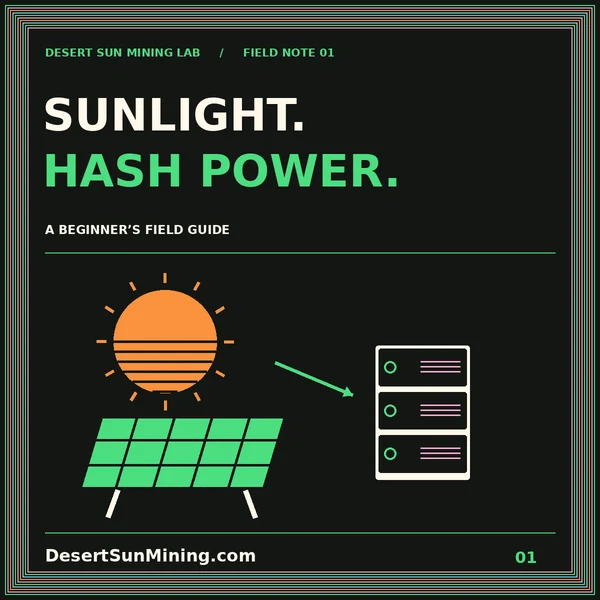
A photovoltaic installation belongs to the electrical side of the plan. Its intended loads, conversion equipment, protection, and operating limits need to work together. The solar mining overview starts with these decisions and links to transparent array and battery examples.
A direct solar cooker or thermal roaster collects heat for a different process. An electric oven powered by photovoltaic equipment is another possible arrangement, but it must be counted as an electrical load. The solar cooking guide and coffee roasting overview keep those alternatives distinct so you can compare them honestly.
Write a short brief: the desired output, the available site, the people who will operate the equipment, and the conditions under which the activity must stop. Add an affordable learning budget that does not depend on income the project has not earned. Record unresolved questions instead of turning them into favorable assumptions.
Then choose one reading path. Start with Bitcoin mining for a proof-of-work installation, or AI GPU compute for a programmable computing workload. For direct heat, compare solar ovens before selecting a cooking process. For roasting, define the batch before evaluating a machine.
This site uses hypothetical arithmetic where a worked example helps explain a decision. Such examples are not engineering designs, manufacturer specifications, or forecasts. A small pilot should document what happened under its actual conditions, including interruptions and unsuccessful runs. It should not turn one favorable demonstration into a promise of continuous output.
Qualified local professionals should review electrical installations, structural work, and other site-specific requirements. Food handling needs an appropriate validated process. The useful next step is a better-defined question, not a larger system purchased before the first assumptions have been checked.
Use the original documentation to check context and limitations before applying a claim to a specific installation.
Choose mining, a specific AI workload, a cooking process, or a coffee batch before sizing equipment.
Keep photovoltaic electricity, stored energy, and direct solar heat on separate paths.
Set the operating window, backup method, shutdown rule, and evidence needed for the next decision.
Two useful distinctions for this part of the solar plan.
Start with your electrical load, operating window, and shutdown plan—not a promise of mining income.
Explore a shared-energy concept while keeping electrical loads, direct heat, food handling, and site priorities distinct.
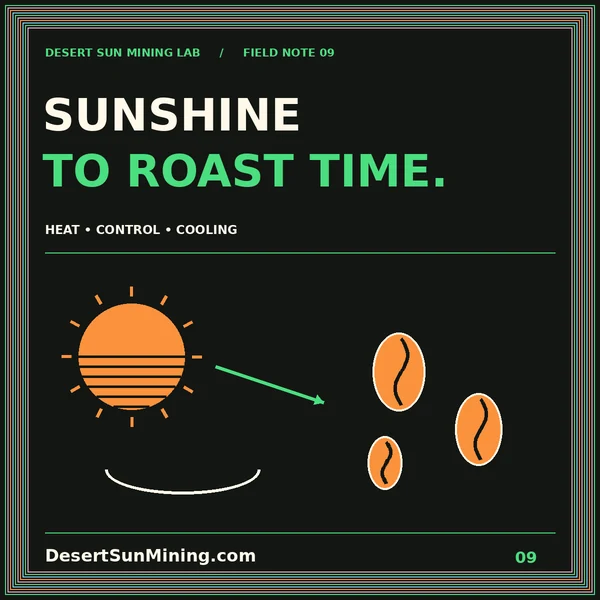
Follow the heat path, log your process, and include cooling and auxiliary power in a realistic roasting trial.