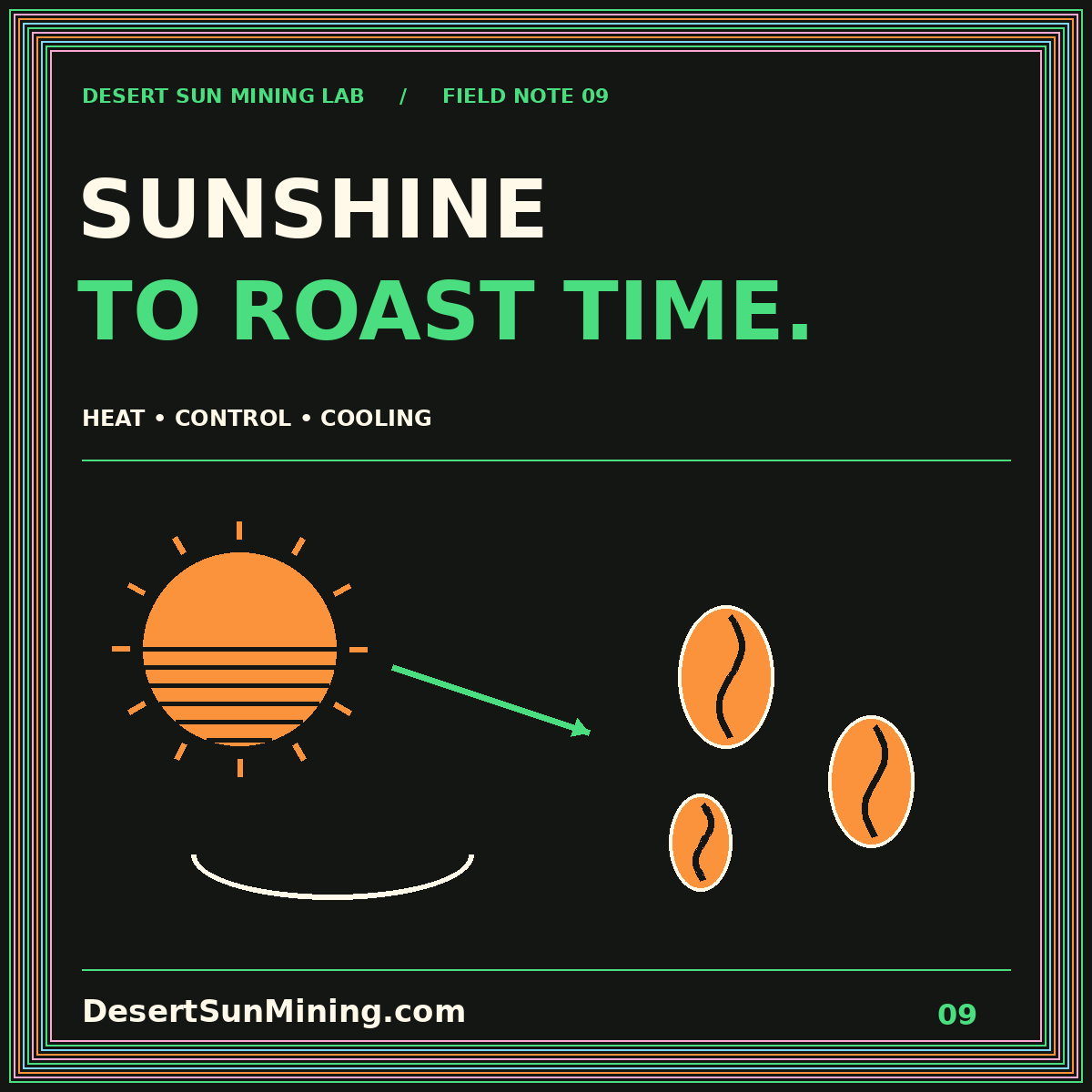
Solar coffee roasting can describe two different energy arrangements. A photovoltaic system can supply electricity to an electric roaster, or a solar-thermal system can concentrate sunlight to provide process heat. The distinction matters because the equipment, control strategy, and response to cloud cover are not the same. Begin by identifying the heat path rather than assuming that every solar roaster is a conventional machine attached to panels.
This introduction focuses on understanding a small roasting process and planning a controlled evaluation. It is not a construction guide for a concentrator or a universal roast recipe. The solar coffee bean roaster overview maps the equipment choices; the steps below explain which observations make a demonstration useful and which claims need more evidence.
Follow the heat through the system
For a photovoltaic-powered electric roaster, the array feeds a designed electrical system, and the roaster remains an electrical load. Its heaters, motors, fans, and controls belong in the power and energy budget. Calling the electricity solar does not remove the need to meet the appliance’s specified input conditions throughout its operation.
For a direct solar-thermal design, a reflector or other collector delivers heat to a receiver or roasting arrangement. Motors, controls, and cooling may still require electricity. Keep those auxiliary demands separate from the collected thermal energy. A system can use direct sunlight for heat without being entirely free of powered components.
Identify the control point
Ask how the operator changes the heat reaching the beans, how the beans are moved, and how the roast is ended. Those questions apply to either energy arrangement. A system that can become hot is not automatically a system that can follow a repeatable process or end it promptly at the chosen point.
Read experiments as experiments
A published study of a batch-type solar coffee roaster reports experiments using a particular solar concentrator and roasting system. It demonstrates that the process can be investigated with defined equipment and measured conditions. It does not establish the performance, commercial availability, or financial return of every machine described as a solar coffee roaster.
When reviewing a paper or demonstration, note the batch, equipment geometry, available solar resource, operating conditions, and measurement method. A result without that context is difficult to transfer to another site. Do not copy an experimental roasting time into an operating instruction for a different machine or assume a research prototype is ready for unattended use.
Use the study to improve the questions you ask. What was measured? Which parts of the process required electricity? How did the operator control heat and cooling? What remained outside the experiment? Those questions are more transferable than a single impressive throughput figure.
Begin with a repeatable batch definition
Record the green coffee lot, starting mass, and relevant information supplied with the beans. Use a consistent batch size within the machine’s documented range while learning the process. Changing the bean lot and the batch size at the same time makes it difficult to understand why the result changed.
Define the goal in observable terms. For a trial, the goal might be to document a complete batch, operate every control as intended, and obtain an evenly processed sample for evaluation. Avoid beginning with a promise about commercial quality or flavor that the trial has not yet demonstrated.
Keep the handling sequence consistent. Prepare the equipment according to its instructions, confirm that the cooling arrangement is ready, and make sure the operator can end the roast safely. A process log is useful only when the physical sequence is sufficiently organized to let someone record what actually happened.
Log the process rather than only the final color
Record time, the available temperature measurements, control changes, and significant observations. Identify where each temperature sensor is located. A sensor near the drum, in an air stream, or near the beans may describe different parts of the process. Do not compare those readings as though they were interchangeable.
Write down changes in sunlight or operating conditions alongside the roast observations. A cloud interruption, reflector adjustment, or changed fan setting may help explain a result later. The log should distinguish a measured value from a sensory note and from the operator’s interpretation. That separation makes the record useful even when the interpretation is revised.
After cooling, record the final mass and the method used to evaluate the sample. If comparing batches, use a consistent preparation and tasting approach and label the samples clearly. A favorable cup from one batch is encouraging, but it does not by itself establish repeatability across weather, operators, and coffee lots.
Plan for changing sunlight
Ask the equipment designer how the system responds when heat input falls or rises. The answer may involve supported control changes, an auxiliary heat source, or a defined stopping procedure. Do not assume a reflector can be repositioned freely or that an improvised backup heater is compatible with the machine.
Before loading coffee, define the conditions under which the trial will proceed and the conditions under which it will stop. A clear-sky demonstration with full supervision has a narrower operating envelope than a production service with delivery commitments. State that envelope rather than presenting the demonstration as proof of all-weather operation.
Keep interruptions in the record, including unsuccessful batches. Removing difficult runs from the evaluation creates an unrealistic picture of the process. A useful pilot identifies how often the intended procedure could be completed and why a run was abandoned, not merely the best result obtained during a favorable afternoon.
Treat cooling as part of the roast
The process does not end when heating is reduced or the beans leave the primary roasting zone. The equipment needs a suitable, controlled way to handle and cool the hot batch. Confirm that the intended cooling arrangement is ready and that any required electrical power remains available when the heating phase ends.
Do not overlook this requirement in an off-grid energy budget. A design that reserves electricity only for drum rotation during heating may omit a later fan or other auxiliary load. Map the complete cycle from preparation through cooling and cleanup. The energy schedule should support the process, including its final stages.
Record cooling actions and timing consistently when comparing batches. A change in post-heating handling can complicate interpretation of the final result. Keep the evaluation focused on the complete procedure rather than assigning every difference to the solar heat source.
Design for people, chaff, and concentrated light
Follow the machine’s instructions for hot surfaces, moving parts, ventilation, chaff collection, and cleaning. Keep combustible materials away from the operating area. A solar heat source does not eliminate the hazards of a hot roasting process, and an outdoor location does not automatically provide an acceptable ventilation arrangement.
For concentrator systems, control access to reflected and focused light. Do not look into the beam or place hands or objects in its path. The equipment should have a documented safe adjustment and stow procedure. Concentrated sunlight is not an appropriate feature for improvised demonstrations in an uncontrolled public area.
Leave fabrication, electrical integration, and protective controls to appropriately qualified people. A beginner’s process log can help evaluate a finished system, but it does not establish the safety of a home-built reflector, receiver, or powered mechanism. Keep the learning objective within the equipment’s documented operating scope.
Conclusion: make the process repeatable before making claims
The useful promise of a solar roasting pilot is better understanding: a defined heat path, a complete operating record, and a clear view of limitations. Start with repeatable batches and measured conditions, include cooling and auxiliary power, and preserve unsuccessful runs in the evaluation. Then use the roasting-machine buyer’s guide to turn those observations into a more precise equipment brief.