Define the batch
Record the coffee lot, load, intended result, and conditions for a controlled trial.
Follow a coffee batch from its heat source through control, handling, cooling, and evaluation. The word “solar” does not replace a repeatable process.
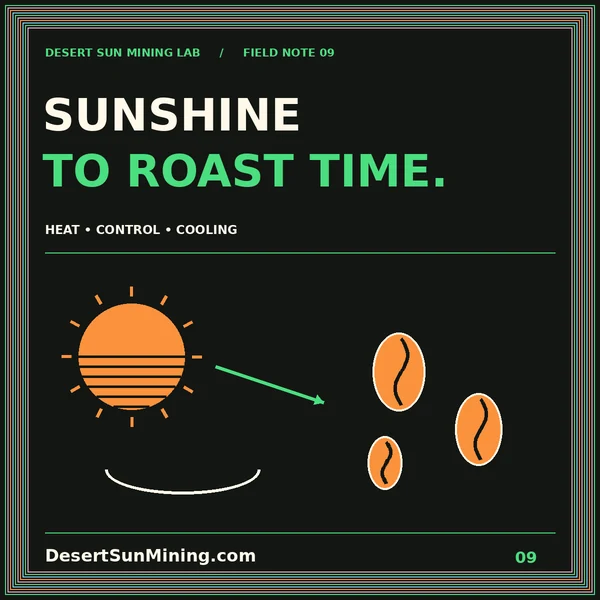
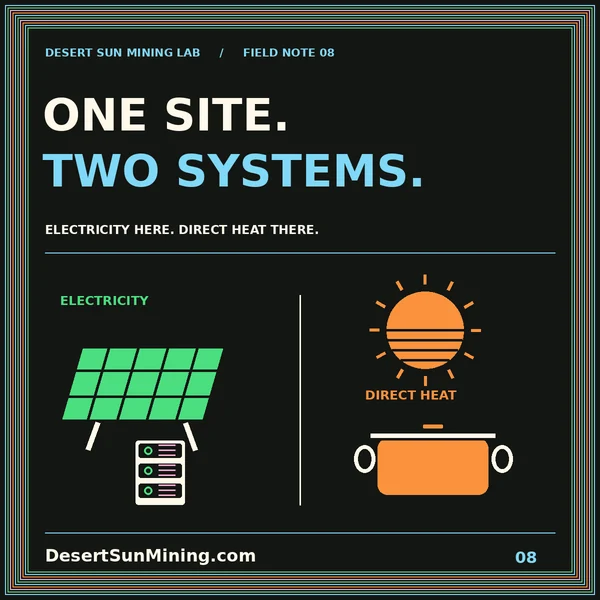
A solar-powered electric roaster remains an electrical appliance supplied by a designed photovoltaic system. A direct solar-thermal roaster uses collected sunlight as process heat. Motors, controls, tracking, and cooling may still need electricity, so the complete system boundary matters in either case.
Write down the heat path and the powered components before comparing equipment. A research prototype, a custom-built concentrator, and a conventional appliance connected to solar electricity are different proposals. Their specifications should not be mixed together under one undifferentiated “solar roaster” label.
Record the green coffee lot, starting mass, and intended operating range. Use a consistent batch size within the equipment’s instructions while learning the process. Decide which observations count as a successful trial before turning on the heat.
The solar roasting basics guide develops a practical batch log. It separates measured temperatures, operator adjustments, sensory observations, and later interpretation so that the record remains useful when an explanation changes.
Ask how the operator changes heat input, moves the beans, and ends the roast. Identify where sensors are located and what each reading describes. A hot drum, hot air, and a bean-temperature measurement are not automatically the same signal.
For direct solar heat, ask how the system responds to changing conditions and how it is made safe. Do not assume that reflector adjustments or an improvised backup heat source are permitted. Use the equipment’s documented controls and operating envelope.
Plan the complete cycle rather than only the heating interval. The intended cooling arrangement must be ready when needed, and any electrical load it uses belongs in the energy schedule. A site that reserves power only while the drum rotates may overlook another important stage.
Keep cooling actions in the batch record. A change in handling after heating can affect how a later comparison is interpreted. Consistency across preparation, heating, cooling, and evaluation is more informative than a single favorable cup or an impressive temperature display.
Published solar-roasting experiments provide evidence about particular systems under stated conditions. They do not establish the current availability, support, performance, or payback of every product with a similar description. Use the paper linked below to identify useful questions about the energy path and experimental boundaries, not as a universal recipe.
When moving from a trial to procurement, read the solar roasting machines guide. Request a demonstration that includes the complete cycle, document unanswered questions, and distinguish a commercially supported system from a development project before committing to either.
Use the original documentation to check context and limitations before applying a claim to a specific installation.
Record the coffee lot, load, intended result, and conditions for a controlled trial.
Track sensor locations, adjustments, sunlight changes, and cooling actions.
Keep unsuccessful runs in the record and avoid generalizing from one favorable demonstration.
Two useful distinctions for this part of the solar plan.
Follow the heat path, log your process, and include cooling and auxiliary power in a realistic roasting trial.
Ask for documented capability, a complete system price, relevant demonstrations, and a practical service plan.
Explore a shared-energy concept while keeping electrical loads, direct heat, food handling, and site priorities distinct.